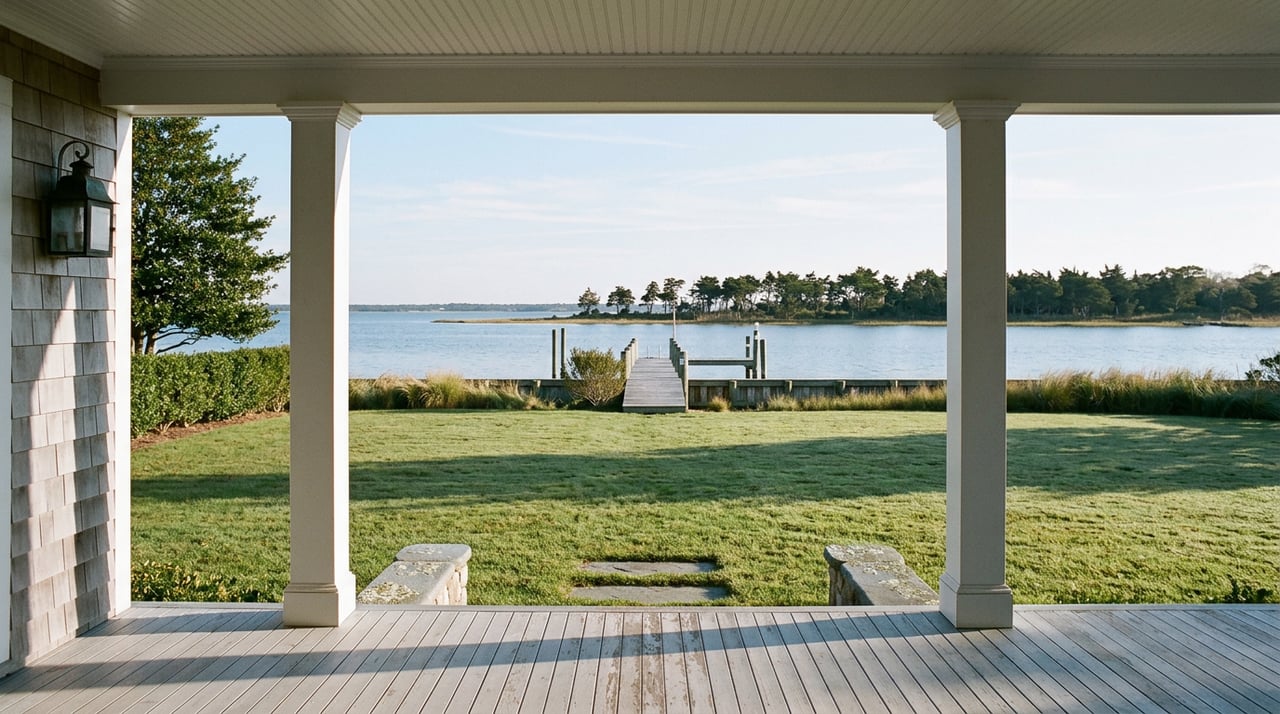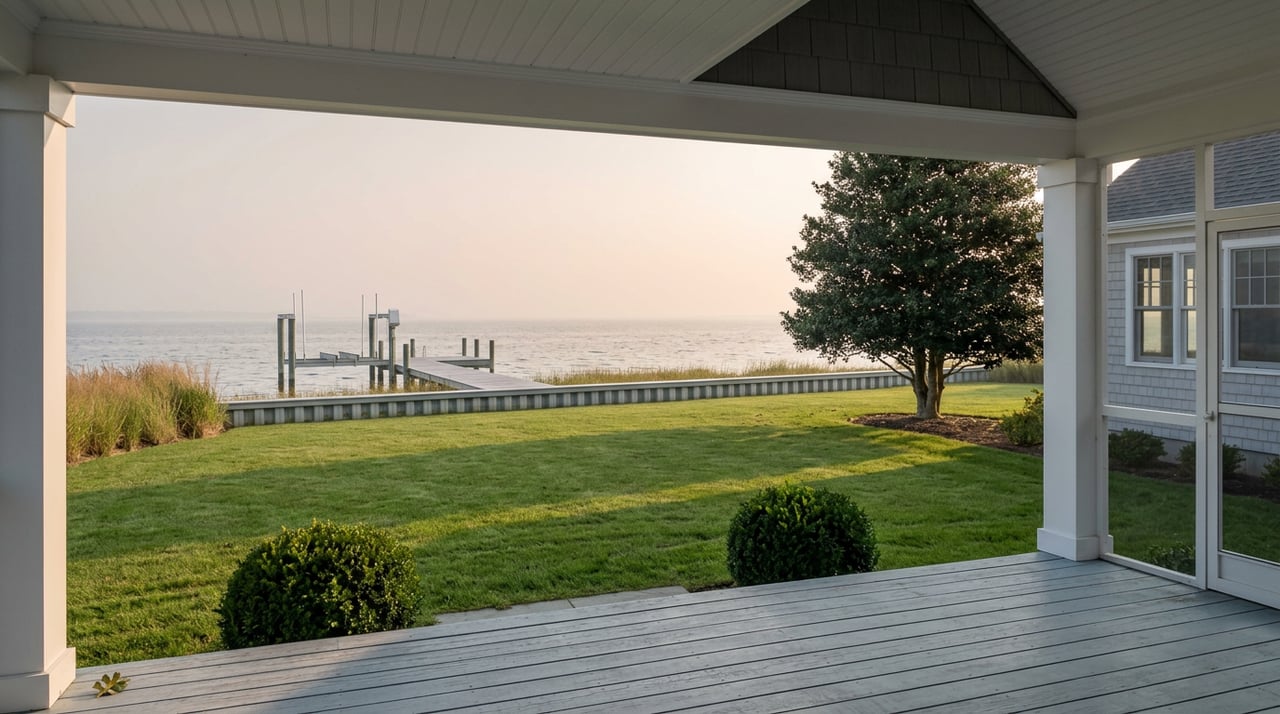
An attorney doing routine title work on a bay-side property gets an email from a title company flagging a decades-old survey. The parcel in question is not underwater. It has a lawn, a bulkhead, a dock with a boat lift. It looks, in every practical sense, like it belongs entirely to the seller. But somewhere in a filing cabinet in Trenton is a map that says otherwise, and until that map is dealt with, the closing does not move.
This is not a hypothetical. It is the ordinary, unglamorous mechanism that governs a strip of nearly every bayfront lot on New Jersey's barrier peninsulas, Mantoloking included. Buyers ask about square footage, dock depth, flood zone letters. Almost no one asks who actually holds title to the ground under the bulkhead. The answer, more often than most people assume, is the State of New Jersey.
The Wall Between Your Lawn and the Bay Isn't Always Yours
New Jersey law holds that the state owns, in fee simple, all land that is currently or was ever flowed by the mean high tide of a natural waterway. That includes obvious cases like open bay water. It also includes land that was tidal a century ago, got filled in, and now has a house sitting on top of it with no visible sign anything was ever underwater. The New Jersey Department of Environmental Protection's tidelands program names Barnegat Bay specifically as an example of a currently flowed waterway subject to this claim. Mantoloking's bay side faces directly onto Barnegat Bay, which means the bayfront half of the peninsula is squarely inside the geography this rule was written for.
The state calls this a tidelands claim, and it does not care whether the current owner has ever heard of it. A claim can sit quietly on a property for generations, showing up only when a title search pulls the historic tidelands map and finds an overlap. At that point it becomes what real estate attorneys call a cloud on title. Standard title insurance will not cover it until it is resolved.
Why the Bay Side of the Peninsula Feels This More
Mantoloking is a barrier peninsula with the Atlantic on one side and Barnegat Bay on the other, which is exactly the geometry that produces the most tidelands exposure. Oceanfront lots generally sit above a stable dune line. Bayfront and canal-adjacent lots are a different story. Many were shaped over the past century by filling in marsh edges, extending bulkheads outward, and building docks that reach into water the state still technically owns. Every one of those improvements, if it crosses the historic mean high water line, sits partly on land the state can claim.
This is not a Mantoloking-specific quirk written into local ordinance. It is a statewide rule that happens to apply with particular force wherever bay frontage, docks, and decades of bulkhead work have accumulated, which describes most of the bay side of this peninsula. Tidelands claims exist in 17 of New Jersey's 21 counties, and Ocean County, where Mantoloking sits, is one of them.
Two Ways the State Will Let You Clear It
Once a claim surfaces, there are exactly two paths to a clean title, and which one applies depends on whether the disputed ground is still underwater or was filled in long ago.
If the land was formerly tidal but is now dry, filled ground, the owner can apply for a riparian grant, which is a deed from the state selling its interest in that strip. According to NJDEP's own application instructions, a riparian grant application typically takes about a year to process, and the state is under no obligation to issue one at all. Pricing runs from a stated minimum of roughly $1,000 for the smallest claims up into far larger figures for bigger parcels, scaled to square footage and appraised value.
If the land in question is still actively flowed by the tide, such as the water under a dock, the state will not sell it outright. The owner instead needs a tidelands license, which functions as annual rent for the right to keep a structure there. Licenses are revocable at the Bureau's discretion, and failing to hold one can trigger a formal Notice of Action, which acts as a lien against the property until resolved.
Neither path is fast, and neither is optional once a claim is found. A buyer who assumed a waterfront closing runs on the same calendar as any other purchase discovers, usually mid-transaction, that it does not.
The Second Complication: Building Higher Just Got a Reprieve
Anyone planning to rebuild, substantially renovate, or raise a Mantoloking waterfront home is running into a second, unrelated piece of state regulation that landed at almost the same moment. On January 20, 2026, NJDEP adopted its Resilient Environments and Landscapes rule, which requires new construction and substantial improvements in tidal flood areas to sit four feet above FEMA's 100-year base flood elevation, a threshold the state calls the Climate-Adjusted Flood Elevation. The rule also expanded the geographic footprint of regulated flood hazard areas across the coast.
Here is where a lot of information circulating since spring is now out of date. The rule originally gave applicants a 180-day legacy window, meaning any project with a technically complete permit application filed by July 20, 2026 could still be reviewed under the older, less restrictive standards. Plenty of guidance published earlier this year treated that July date as a hard deadline. It no longer is. On June 1, 2026, NJDEP formally proposed extending the legacy window by a full year, to July 20, 2027, after pushback from more than 130 New Jersey mayors and the state's building industry. In its own project guidance, current as of early August 2026, NJDEP said it was continuing to apply that extended timeline to eligible applications while the formal rulemaking finished. The elevation standard itself has not changed. What changed is how much time a homeowner has to get a permit application in before the new, stricter rule applies.
For a Mantoloking bayfront owner weighing a teardown or a major lift, that extra year is real leverage, provided the application actually gets filed and deemed complete before the window closes again.
Before You Waive Your Inspection Contingency
A buyer moving quickly on a bay-side or canal-adjacent property in Mantoloking should treat these two items as diligence, not paperwork to handle after closing.
- Order a dedicated tidelands search, separate from the standard title search, and do it early enough that a claim does not surface for the first time during attorney review.
- Ask whether the current owner holds a riparian grant or license on file, and if so, confirm it actually covers the dock, bulkhead, or filled area in question rather than an adjacent parcel.
- If any renovation, elevation, or rebuild is part of the plan, ask your architect or contractor whether the project could be filed for legacy status before the current extended window closes, since the elevation math changes meaningfully on either side of that line.
- Build the timeline for either a grant or a license into your closing expectations rather than assuming a waterfront purchase moves at the same pace as a standard resale.
None of this shows up in a listing description. It shows up in a title commitment, usually with less notice than anyone would like.
Frequently Asked Questions
Does every waterfront home in Mantoloking have a tidelands claim? No. Many bayfront and canal properties clear title without issue. The risk rises with older bulkheads, filled shoreline, and any dock or structure that extends past what was historically dry land, which is common but not universal.
If I'm not building or renovating, does the REAL rule affect me at all? The elevation requirement applies to new construction and substantial improvements, not to homes as they currently sit. It becomes relevant the moment you plan a major renovation, rebuild after storm damage, or make changes large enough to qualify as a substantial improvement under the flood hazard rules.
Can a tidelands claim actually stop a sale? It can stall one. The claim itself does not prevent a transfer of the rest of the property, but title insurers will typically require the claim be resolved, or specifically excepted from the policy, before they will insure clean title. A deal with a tight closing date and an unresolved claim is where the friction shows up.
If you are weighing a Mantoloking bayfront purchase, or you are the one selling a home that has carried the same dock and bulkhead through three generations of family summers, the diligence above is worth doing before the offer stage, not after. Clayton & Clayton has spent nearly a century on this stretch of the Gold Coast and has walked more than one closing through exactly this process. Schedule a confidential consultation and we will look at the specific parcel with you before you are locked into a date.