The New Jersey Department of Environmental Protection describes it plainly on its own tidelands page: a claim against your waterfront lot is "a cloud on a property owner's title regardless of whether or not that property owner is aware" when they bought the place. Not if you built the dock yourself. Not if the prior owner did. The state's claim survives every closing that came before yours.
That single sentence explains more about buying or selling on Mantoloking's bay and ocean blocks than any comparable sales figure. And it points to something counterintuitive about this particular market: the newer the construction, the more likely a dock, bulkhead, or filled section of yard has an open tidelands question attached to it. In a town where a large share of the waterfront housing stock was rebuilt after Superstorm Sandy, that is not a rare edge case. It is close to routine.
What a Tidelands Claim Actually Is
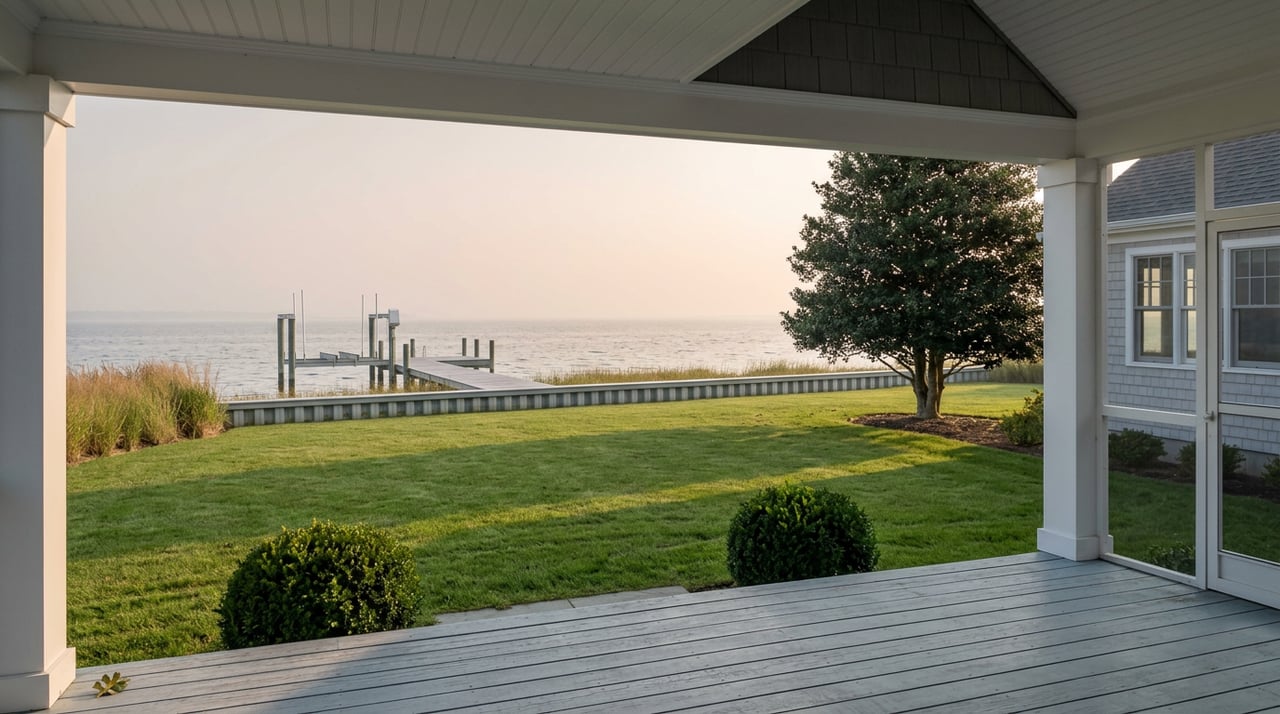
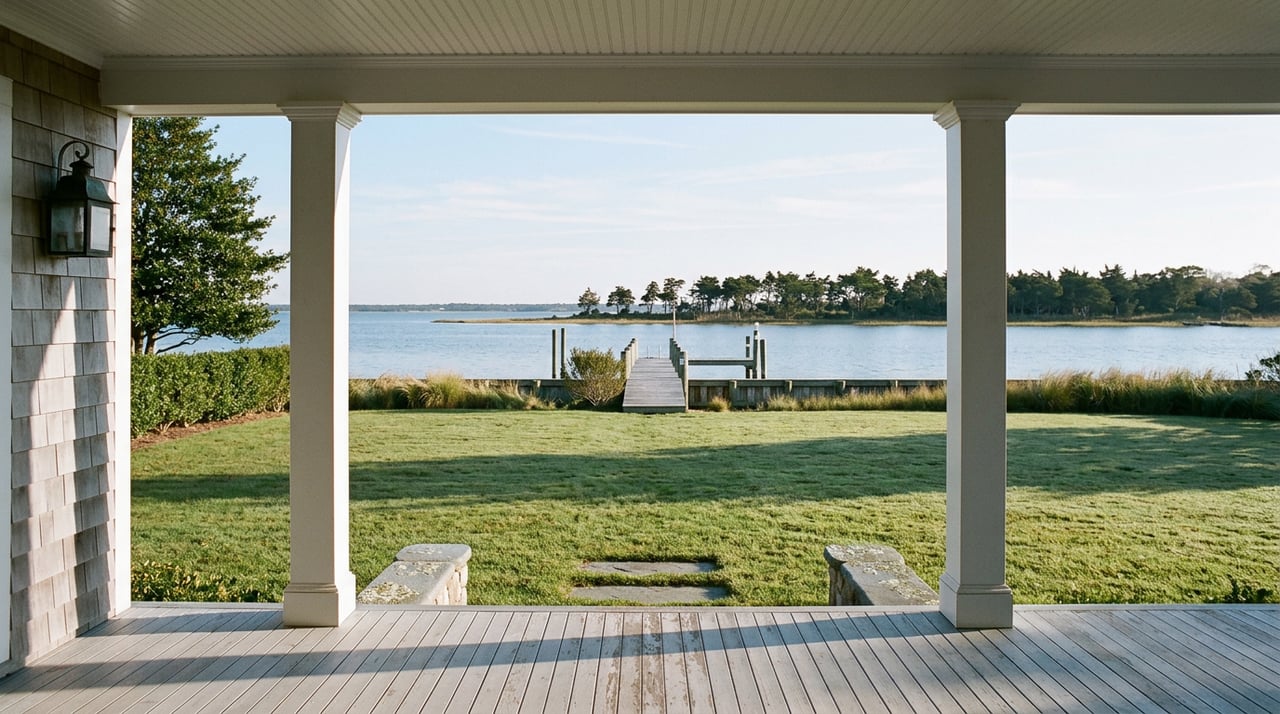
New Jersey holds title, in fee simple, to any land that is now or was ever flowed by the mean high tide of a natural waterway, including Barnegat Bay and the ocean frontage that defines Mantoloking. If a portion of a lot was tidal at some point in the past and has since been filled or bulkheaded, the state can still claim that strip as its own, no matter how long ago the fill happened or how permanent the yard looks today. Clearing that claim means either applying for a Riparian Grant, which is a one-time deed purchase from the state for land that is no longer flowed by the tide, or accepting a Tidelands License, which functions as an annual, revocable rental agreement for land the state still considers open water. The NJDEP's own tidelands program page lays out both processes and is worth reading before any offer goes in on a property with a dock or bulkhead.
The stakes are not abstract. One documented New Jersey shore closing involved a title search that turned up an eight percent riparian claim with no grant on file, and the parties had to escrow funds against the assessed land value while a riparian survey and appraisal worked their way through the Bureau of Tidelands Management. That kind of holdup does not show up in a listing description. It shows up in the title report, usually after an offer is already accepted.
Why This Matters More in Mantoloking Than Elsewhere
Every bay and ocean town on this stretch of the Jersey Shore has some tidelands exposure. Mantoloking has more than most, for a specific reason: Superstorm Sandy tore a new inlet through the peninsula at the point where the Mantoloking Bridge crosses Barnegat Bay, splitting the town in two. Two years after the storm, NJ Spotlight News reported that more than 300 Mantoloking homeowners were still repairing or rebuilding, with well over a hundred parcels sitting empty. A decade later, a retrospective from The City Pulse described construction along Route 35 and the oceanfront as still, in effect, never-ending, with new houses replacing storm-damaged ones up and down the barrier island.
Every one of those rebuilds touched the ground the tidelands law cares about most. NJDEP's own hurricane recovery guidance groups "Houses, Docks, Bulkheads, Marinas" together under the same CAFRA land use review that governed Sandy-era reconstruction. Replacing a bulkhead in its exact prior footprint generally does not trigger a new license. Extending it, rebuilding a dock at a different length, or filling behind a new bulkhead line almost always does. Mantoloking's rebuild wave produced a lot of the second category and comparatively little of the first.
The Part Buyers Get Backwards
Most buyers assume newer construction means fewer legal loose ends. On the tidelands question specifically, the opposite can be true. A bulkhead that has sat untouched since the 1960s may carry an old grant, a long-settled claim, or simply enough history that no one has looked closely in decades. A dock rebuilt in 2019 to accommodate a bigger boat, or a bulkhead extended a few feet during post-Sandy reconstruction, is a fresh land use event. New Jersey's current policy only sells grants for land that has already been filled and is no longer tidal. Anything still touching currently flowed water, which describes most working docks and many bulkhead faces on Barnegat Bay, can only be licensed, not owned outright, and that license is revocable by the state at any time.
Here is the practical distinction a buyer or seller needs at the closing table:
| Instrument | What it covers | Term | Typical trigger |
|---|---|---|---|
| Riparian Grant | Formerly flowed land that is now filled | Permanent, one-time purchase | Clearing an old claim on dry, filled ground |
| Tidelands Lease | Land or structures over currently flowed water, including homes built over water | Long term, often around 20 years | Structures with long-term financing tied to them |
| Tidelands License | Docks, bulkhead extensions, mooring piles, dredging | Short term, renewable, revocable | New or modified docks, bulkhead extensions, recent construction |
A property can carry all three at once, or none, depending entirely on what has been built and when.
The Ruling That Changes the Conversation This Year
On March 18, 2026, the New Jersey Supreme Court settled a question that had been open for years: whether the state's Tidelands Resource Council has the authority to set or modify a pierhead line, the boundary beyond which no dock may extend, while reviewing a license application. In a unanimous decision in the matter of P.T. Jibsail Family Limited Partnership, the court confirmed that it does. The case reached the court out of a dock dispute on West Point Island in Lavallette, a few miles south of Mantoloking, where a neighbor objected to a dock extension on navigational and safety grounds. The ruling does not change the underlying tidelands law. It confirms that the council's authority over dock length and placement is real and enforceable, even after a structure is built and in use.
For anyone buying bayfront property in Mantoloking with an eye toward a longer dock or a bigger boat, the practical takeaway is straightforward: a license in hand today does not guarantee the same dock length is available tomorrow if a neighbor objects or the council revisits the pierhead line. That is worth factoring into any renovation plan, not just the purchase itself.
What to Ask Before You Sign
A tidelands question rarely kills a Mantoloking sale outright, but it can add months to a timeline that a seller, buyer, or their lender did not budget for. Before writing an offer on a property with a dock, bulkhead, or any filled section near the water:
- Ask whether the current bulkhead or dock has a recorded Riparian Grant, Lease, or License, and whether it is current or expired.
- Ask when the bulkhead or dock was last rebuilt or extended. Post-2012 work is worth a closer look given the volume of Sandy-era reconstruction in town.
- Ask your title company to run a tidelands search early, not as a formality at closing. Shore-area title officers who work this coastline regularly know how to read the tidelands maps and what documentation the Bureau of Tidelands Management will accept.
- If a claim turns up, ask whether the timeline for a grant or license fits your closing date. Grant applications commonly take about a year to process, and complex ones can run longer.
A Few Direct Questions
Does every waterfront home in Mantoloking have a tidelands issue? No. Many lots have clean grants dating back decades, and some were never flowed by the tide at all. The point is not to assume a problem, only to check early rather than discover one during attorney review.
If my dock has been there for thirty years, is it automatically fine? Age helps, but it is not a substitute for documentation. A long-standing dock without a recorded license or grant is still, on paper, unresolved. The Bureau of Tidelands Management keeps historical permit records and can often confirm what exists even if a homeowner's own paperwork is missing.
Can I sell a property with an open tidelands claim? Yes, with disclosure and a plan. Some sellers resolve the claim before listing. Others negotiate an escrow holdback so the sale closes on schedule while the grant or license application proceeds. Either approach works, but both require knowing about the claim well before the closing date, not after.
Mantoloking's waterfront has always asked more of the people who buy into it, from the storm history written into its rebuilt shoreline to the state paperwork attached to nearly every dock along it. Shawn Clayton and the team at Clayton & Clayton have spent decades walking Mantoloking and Bay Head buyers and sellers through exactly this kind of closing detail, the kind that a listing photo never shows and a comparable sale never explains. If you are weighing a purchase or preparing to list on this stretch of the bay or ocean, schedule a confidential consultation before the paperwork becomes a surprise instead of a plan.